Good day everyone, and welcome back to our journey through the Gospel of John! 😊 Today we’re diving into Chapter 15. My prayer is that as we reflect together, God’s Word brings encouragement, guidance, and fresh revelation for your daily walk.
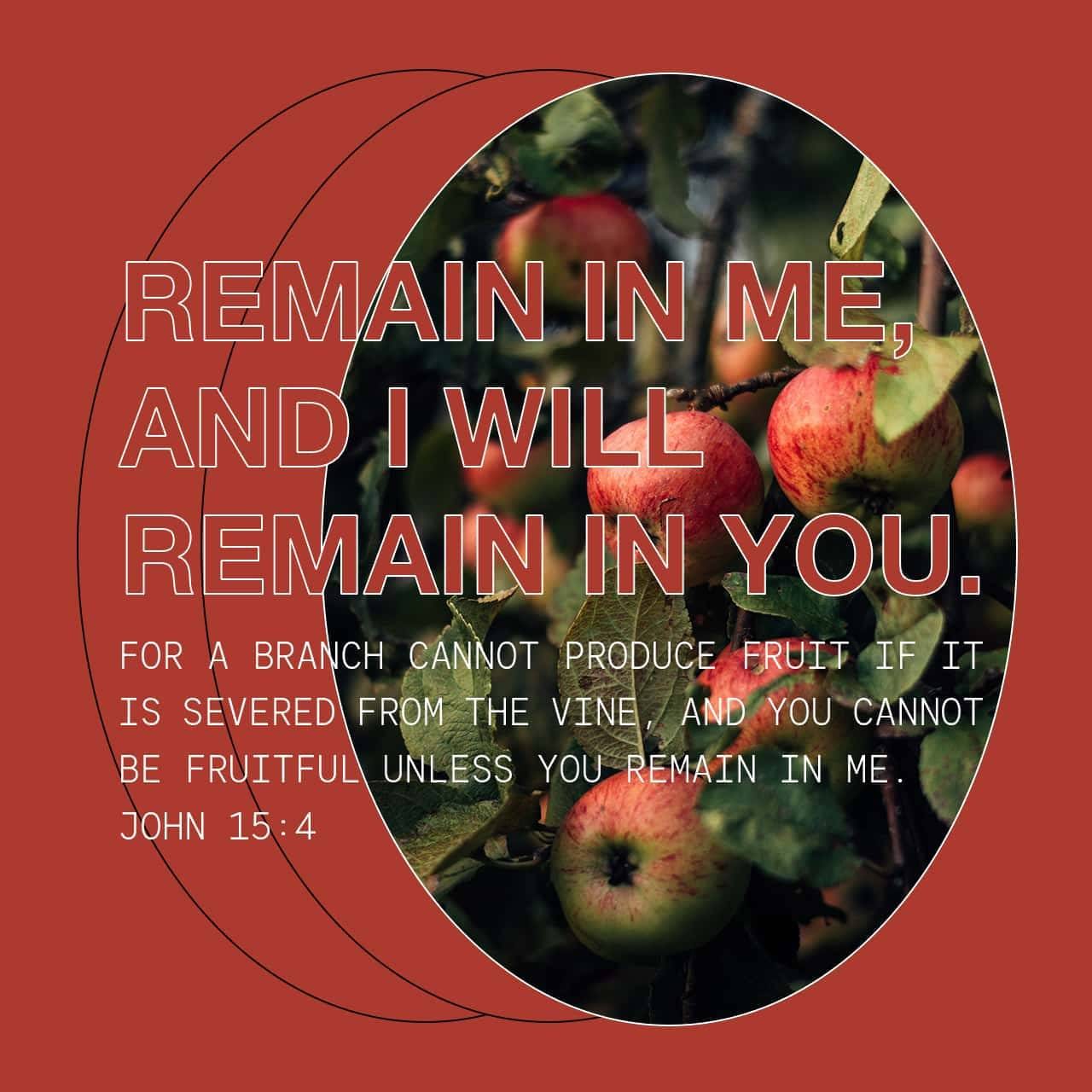
This chapter opens with Jesus revealing something very personal and foundational about our relationship with Him. He tells us that He is the vine, and His Father is the gardener—the One who lovingly tends, prunes, and cares for the branches so that they can bear even more fruit.
This promptly leads us to an important question: Are we producing fruit?
And if your honest answer is “I’m not sure” or even “no,” could it be that you have become disconnected from the vine?
Just as a branch can’t produce fruit when it is separated from the vine, we too can’t grow spiritually. We can’t love as Christ commands. We can’t make disciples or live a fruitful Christian life when we detach ourselves from Jesus. Our source of life is found in Him alone. I love how The Passion Translation expresses this so beautifully:
‘4 So you must remain in life-union with me, I remain in life-union with you. For as a branch severed from the vine will not bear fruit, so your life will be fruitless unless you live your life intimately joined to mine.’ (John 15:4 TPT)
The word union speaks of togetherness, closeness, harmony, and agreement. This is exactly what Jesus is offering us—an intimate life-union with Him. When we live joined to Christ, our lives become fruitful in every area.
Jesus reinforces this truth again in verse 5. If we stay in Him and He stays in us, we will bear much fruit. But apart from Him, we can do nothing. This does not mean we can’t be busy or productive in our own strength. It means that nothing we do apart from Christ will carry lasting, eternal value. Effort without intimacy produces temporary results, but fruit that comes from abiding in Him lasts for eternity.
Do you want answered prayers? Do you long to see God move powerfully in your life? Jesus gives us an incredible invitation in verse 7:
‘7 But if you live in life-union with me and if my words live powerfully within you—then you can ask whatever you desire and it will be done. (John 15:7 TPT)
This truly feels like a blank check. But it comes with one powerful condition: stay in life-union with Christ. Allow His words to live strongly within you.
This requires intentional time in God’s Word. That is how we grow in intimacy. This is how we learn His heart and understand His will. It is also how we allow His truth to shape how we live. After all, this is not religion, it is a relationship. You can’t claim intimacy with someone you never spend time with. Remember, Jesus is inviting us into a union.
Jesus continues with a beautiful expression of love in verses 9 -11.
‘9 “I love each of you with the same love that the Father loves me. You must continually let my love nourish your hearts.10 If you keep my commands, you will live in my love, just as I have kept my Father’s commands, for I continually live nourished and empowered by his love. 11 My purpose for telling you these things is so that the joy that I experience will fill your hearts with overflowing gladness!’ (John 15:9-11 TPT)
What an incredible expression of love from Jesus. He tells us to let His love nourish our hearts. Just as branches need nourishment to grow and bear fruit, our hearts are nourished by God’s love. Jesus Himself models this for us, He lives continually empowered and strengthened by the Father’s love through obedience.
We show our love for Him by obeying His commands. Obedience is not a burden; it is our response to love. And Jesus assures us that He is telling us all these things so that our joy will be full. It will be overflowing joy. This doesn’t mean that life will be free from challenges. Even in the midst of trials, we carry a deep and unshakable joy that comes from God Himself.
Later in the chapter, Jesus makes another remarkable statement:
’15 I have never called you ‘servants,’ because a master doesn’t confide in his servants, and servants don’t always understand what the master is doing. But I call you my most intimate and cherished friends, for I reveal to you everything that I’ve heard from my Father. 16 You didn’t choose me, but I’ve chosen and commissioned you to go into the world to bear fruit. And your fruit will last, because whatever you ask of my Father, for my sake, he will give it to you! (John 15:15-16 TPT)
Jesus draws us closer and reminds us that this life-union is not a master–slave relationship. It is a relationship of intimacy and friendship. He calls us His cherished friends and invites us into His heart and into what the Father is doing.
But this friendship is also a commissioning. We are not called to stay in intimacy alone, we are sent out to reproduce it in others. Jesus has chosen and commissioned us to bear fruit that will last. The fruit He speaks of includes both character fruit and ministry fruit. Character fruit is seen in the fruit of the Spirit described in Galatians 5:22–23. Ministry fruit is seen in the lives we impact and the souls we bring to Christ. When we stay connected to the vine, both kinds of fruit naturally grow.
Jesus closes this teaching with a simple but powerful command:
’17 So this is my parting command: Love one another deeply!”’ (TPT)
Love is central to our walk with God, because God Himself is love. When we walk in His love, we are empowered to love others, even when it is difficult. Love is not optional—it is essential.
As we bring today’s reflection on John 15 to a close, let us pause and honestly ask ourselves:
- How deep is my love walk?
- Can others see God’s love reflected through me?
- Am I producing fruit—both in character and in ministry?
- Am I still truly grafted into Christ, or have I slowly drifted away from daily intimacy with Him?
My prayer is that the love of God will continually nourish our hearts and empower our lives, in Jesus’ name. Amen.
Thank you so much for joining me in our study of John 15. I would love to hear from you—what stood out to you most in this chapter? Share your reflections in the comments so that we can continue growing together in faith. 💛

 BlogThruDaBible